
Introduction: Welcome to the Era of Autonomous Work
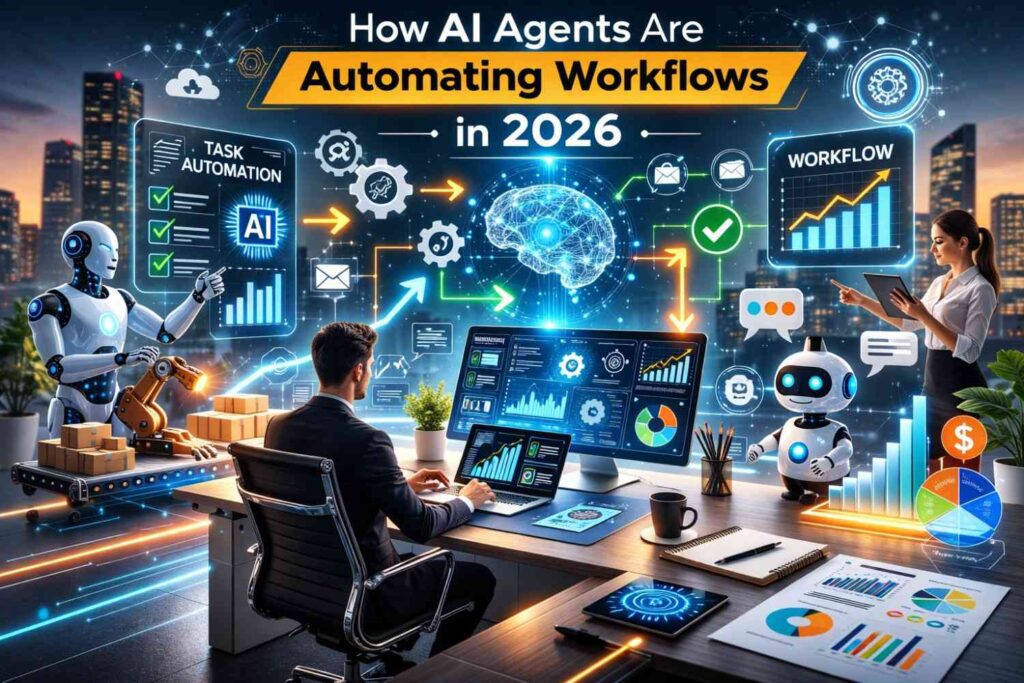
In 2026, AI agents workflow automation is transforming the way businesses operate. These autonomous AI systems can analyze data, make decisions, and execute tasks without constant human supervision, making workflows faster, smarter, and more efficient. From intelligent task management to automated content creation, predictive analytics, and AI-driven productivity improvements, AI agents are reshaping industries. In this article, we explore the latest trends in AI automation 2026, real-world examples of autonomous AI for business, and actionable strategies to implement AI agents to maximize efficiency and output.
In 2026, AI agents are no longer simple tools — they have become intelligent collaborators that can manage entire workflows autonomously. Businesses across the globe are leveraging these agents to improve productivity, reduce costs, and enhance decision-making.
Gone are the days when automation was just “macro-level rules” or repetitive task scripts. Today’s AI agents combine machine learning, natural language processing, and predictive analytics to plan, execute, and optimize complex tasks in real-time.According to industry research on the top 10 agent AI trends for 2026.
If you are new to AI automation, check out our beginner’s guide to AI Automation.
In this comprehensive guide, you will learn:
- What AI agents are
- How they are revolutionizing workflows
- Real-world use cases in 2026
- The advantages and limitations of AI agents
- Step-by-step implementation
- FAQs to clear common doubts
What Are AI Agents?
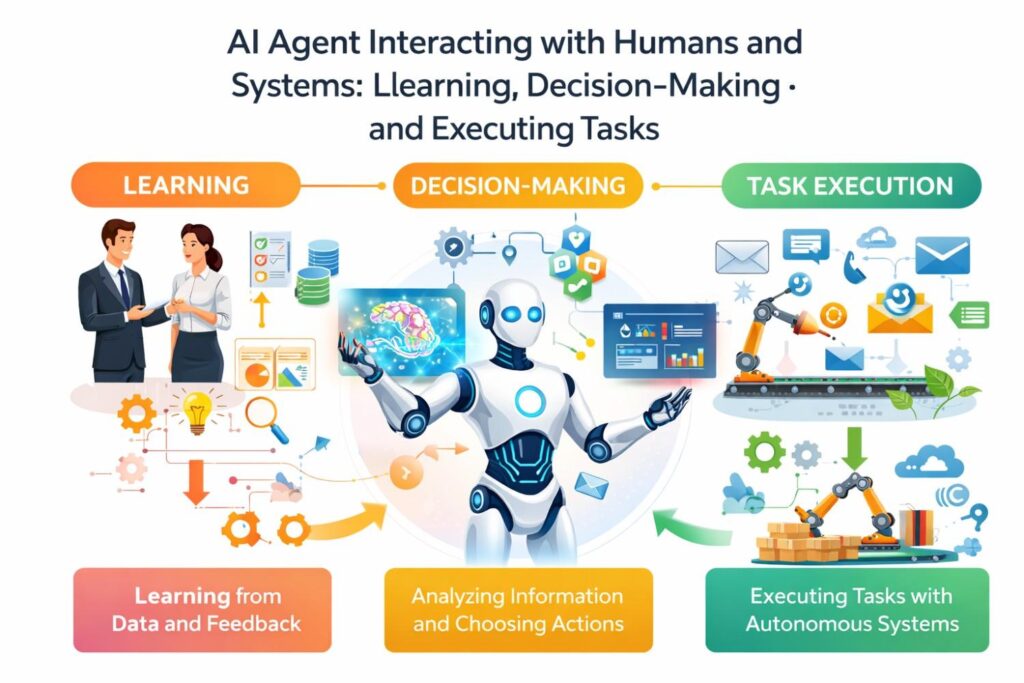
An AI agent is an autonomous system capable of performing tasks without constant human supervision. Unlike traditional AI tools, which execute predefined instructions, AI agents can:
- Analyze complex data
- Make decisions based on context
- Interact naturally with humans and systems
- Learn from past experiences and improve over time
Example: An AI agent in a marketing team can plan campaigns, write content, analyze performance, and suggest optimizations — all with minimal human input.
Key features:
- Autonomy: Executes tasks independently
- Learning: Improves performance over time
- Adaptability: Adjusts workflows based on data patterns
- Integration: Works seamlessly with multiple platforms and apps
Why AI Agents Are Critical for Workflow Automation
Workflow automation aims to simplify, speed up, and optimize repetitive business processes. Traditional automation relied on rigid rules (“if this → do that”), but AI agents bring intelligence to automation.
For example, industry insights show AI agents automating approval routing and cross‑department workflows in large organizations.
Capabilities include:
- Predictive task planning
- Automatic prioritization
- Intelligent communication with humans and systems
- End-to-end workflow monitoring
This intelligence transforms workflows from static and rigid to dynamic and optimized.
How AI Agents Automate Workflows in 2026
1. Smart Task Management
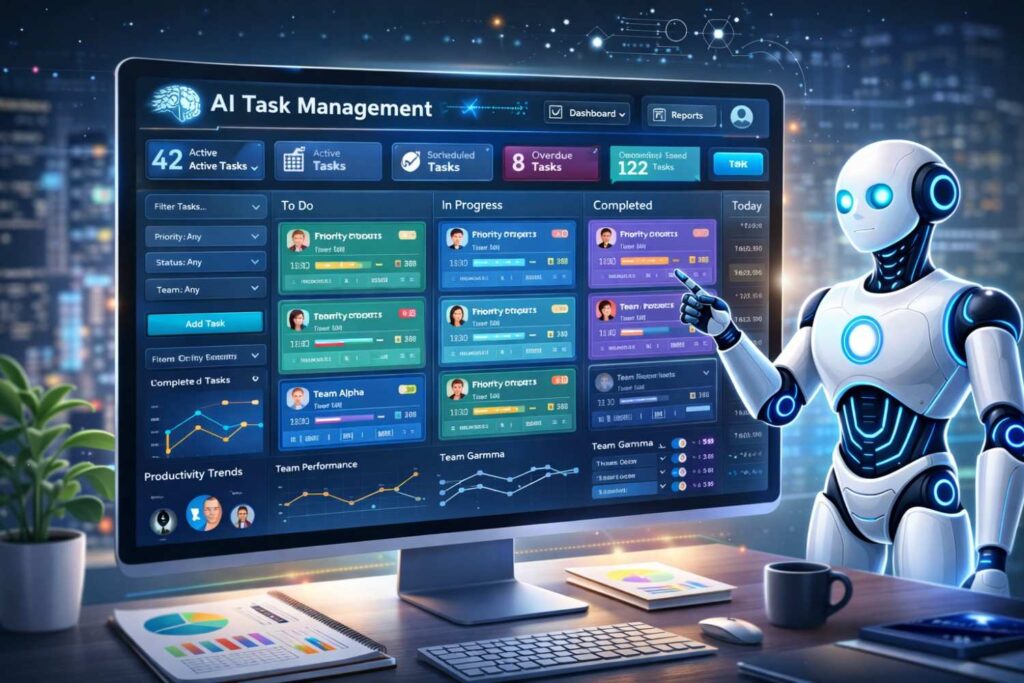
AI agents can:
- Automatically assign tasks to team members based on workload and skills
- Set deadlines and follow up with reminders
- Sync with project management tools like Trello, Asana, or Jira
Impact: Reduces manual task coordination and avoids delays.
Explore the best AI automation tools to streamline workflows.
2. Intelligent Customer Support

AI agents handle:
- Multi-channel queries (chat, email, voice)
- Real-time sentiment analysis
- Escalation of complex issues to humans
- Personalized responses based on user history
Impact: 24/7 support, faster resolution, and improved customer satisfaction.
3. AI-Powered Content Creation & SEO
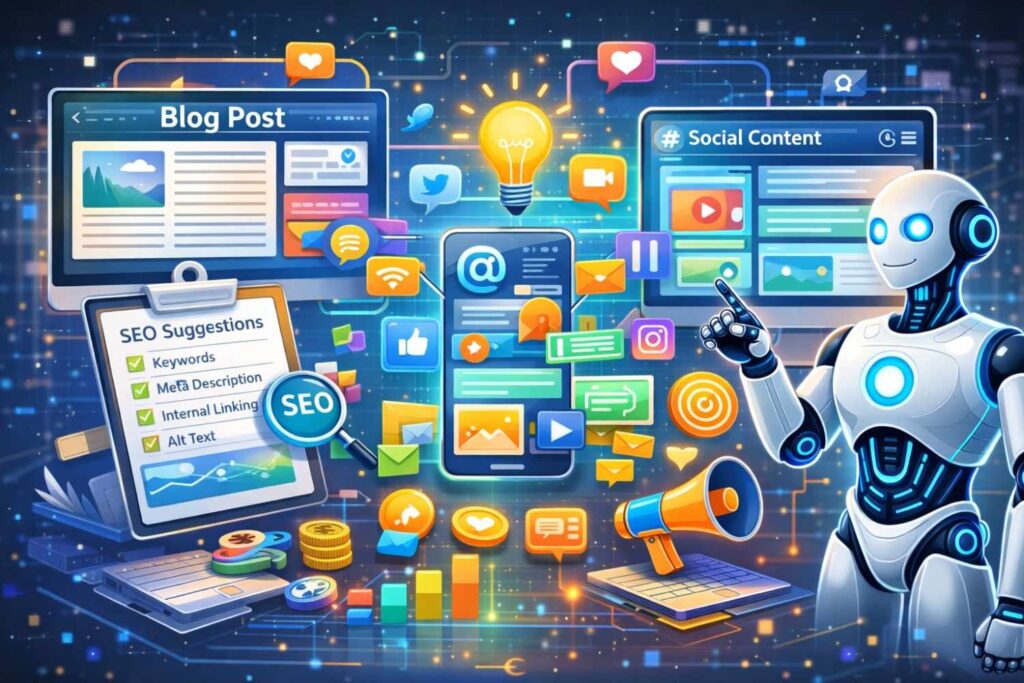
AI agents are transforming content workflows:
- Writing articles, social media posts, and newsletters
- Optimizing content for search engines
- Suggesting topic ideas based on trending keywords
- Tracking content performance and recommending improvements
Impact: Brands can produce high-quality content consistently without overburdening teams.
Learn how AI can boost your business productivity through automation.
4. Data Analytics and Predictive Automation
AI agents analyze large datasets to:
- Detect patterns and anomalies
- Predict outcomes for business strategies
- Automate reporting and dashboards
- Provide actionable recommendations
Impact: Teams spend more time on strategy rather than manual analysis.
5. HR & Recruitment Automation
AI agents can:
- Screen resumes and shortlist candidates
- Schedule interviews automatically
- Evaluate initial candidate fit using data-driven metrics
- Ensure unbiased decision-making
Impact: Speeds up hiring cycles and improves recruitment efficiency.
Real-World Use Cases in 2026
Here are 9 real AI agent use cases reshaping business operations.
Businesses can leverage expert AI automation agencies for tailored solutions.
| Industry | Use Case | Benefit |
|---|---|---|
| Marketing | Campaign optimization & multi-channel automation | Higher ROI, faster execution |
| Operations | Supply chain monitoring & alerts | Reduced delays, efficient resource planning |
| Customer Support | AI-driven chat & call handling | Improved response times, better satisfaction |
| HR | Recruitment automation | Faster, unbiased hiring |
| Finance | Automated expense tracking & reporting | Reduced manual errors, cost savings |
Key Advantages of AI Agents
- Time-Saving: Automates repetitive tasks, freeing human employees for strategic work
- Accuracy & Consistency: Reduces human errors and ensures predictable outcomes
- 24/7 Operations: No downtime for critical workflows
- Cost Efficiency: Decreases operational expenses
- Scalability: Easily adapts to growing business demands
Challenges and Considerations
While AI agents are transformative, businesses should consider:
- Data Privacy: Ensuring sensitive data is protected
- Integration Complexity: Adapting agents to legacy systems
- User Acceptance: Employees must trust AI agents
- Governance & Compliance: Following legal and ethical standards
Step-by-Step Implementation for Businesses
Step 1: Identify repetitive and high-volume workflows
Step 2: Choose an AI agent platform compatible with your tech stack
Step 3: Train agents using historical data
Step 4: Monitor performance and KPIs (time saved, error reduction)
Step 5: Scale gradually to other departments
Pro Tip: Start small, measure results, then expand automation.
Research indicates that modern agent architectures are evolving toward natural language‑driven ecosystems
Conclusion: The Autonomous Future of Work

By 2026, AI agents are reshaping workflows in every major industry. They save time, improve accuracy, and unlock human potential by handling repetitive and data-heavy tasks. Businesses that adopt AI agents early gain a competitive advantage, operational efficiency, and strategic insights.
The message is clear: AI agents are no longer optional — they are essential collaborators in modern workflows.
FAQs – AI Agents & Workflow Automation
Q1: Are AI agents going to replace human jobs?
A: AI agents automate repetitive tasks, but humans are still essential for creativity, strategy, and judgment. The future is collaboration, not replacement.
Q2: Which industries benefit most from AI agents?
A: Marketing, finance, customer service, HR, operations, and logistics are seeing the highest adoption.
Q3: How much does it cost to implement AI agents?
A: Costs vary based on complexity, integration, and scale. Small businesses can start with affordable SaaS tools, while enterprises may invest in custom solutions.
Q4: Do AI agents require programming skills to use?
A: Many modern AI platforms are low-code or no-code, designed for non-technical users. However, technical teams can optimize performance further.
Q5: Can AI agents handle sensitive data?
A: Yes, but businesses must ensure secure encryption, compliance with regulations, and proper access controls.