

A Complete Guide to Reduce Exam Anxiety Naturally
Exam stress management tips for students are essential because exams are not just about testing knowledge — they also test mental strength. Many students feel overwhelmed, anxious, and stressed before exams, even when they are well prepared.
Exams are not just about testing knowledge — they also test mental strength. Many students feel overwhelmed, anxious, and stressed before exams, even when they are well prepared. This exam stress often leads to poor performance, low confidence, and mental exhaustion.
If you are a student who feels nervous before exams or struggles with anxiety, this guide will help you manage exam stress naturally and effectively.
What Is Exam Stress?

Exam stress is the mental and emotional pressure students experience before or during exams.
A small amount of stress can be motivating, but excessive stress negatively affects memory, focus, and performance.
In simple words, exam stress happens when the brain feels overloaded due to fear, pressure, or lack of preparation.
If exam stress is ignored for a long time, it can contribute to serious mental health conditions, especially anxiety and depression in students.
Common Symptoms of Exam Stress in Students
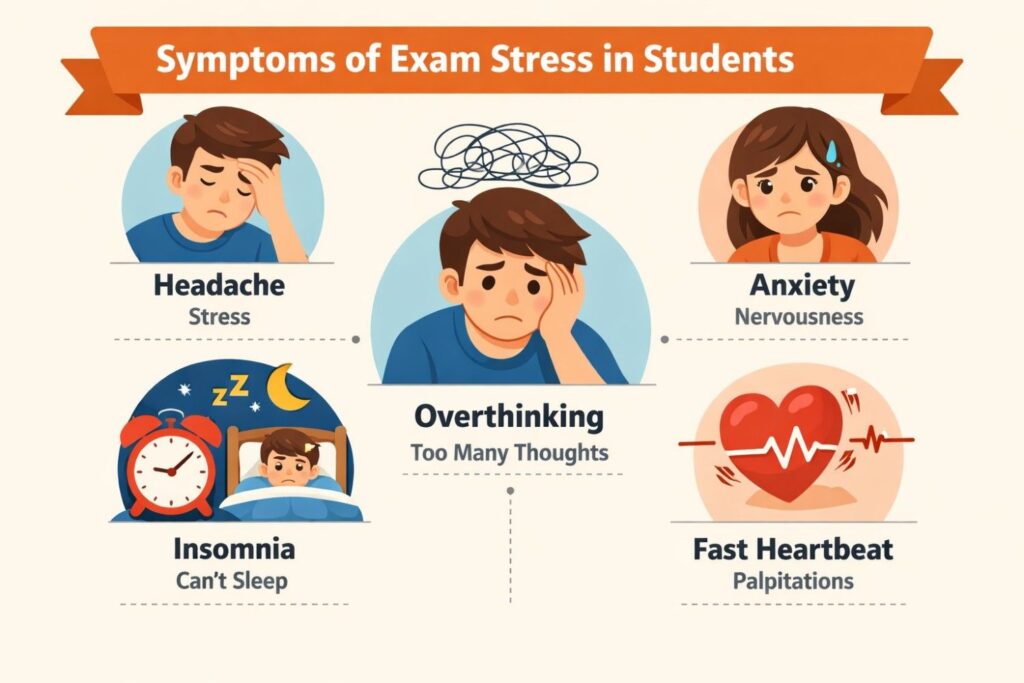
Exam stress affects students differently, but common symptoms include:
- Rapid heartbeat and sweating
- Difficulty sleeping
- Forgetting learned material
- Overthinking and fear of failure
- Headaches or stomach discomfort
- Low confidence and self-doubt
If you experience several of these symptoms, it is important to manage stress early.These are common symptoms of exam stress, and health organizations like the NHS explain how stress affects both mental and physical health.
Why Do Students Experience Exam Stress?
Understanding the root cause helps in managing stress better.Many students struggle with pressure, and organizations focusing on student mental health highlight how academic expectations increase stress levels.
1. Fear of Failure
Students often fear disappointing parents, teachers, or themselves.
2. Poor Time Management
Last-minute studying increases pressure and panic.
3. High Expectations
Unrealistic goals and perfectionism create mental burden.
4. Lack of Confidence
Comparing yourself with others lowers self-belief.
Exam Stress Management Tips for Students (Proven & Practical)
These natural and effective stress management techniques are easy to follow and supported by psychology research.

1. Create a Realistic Study Routine
Avoid overly strict schedules. A simple routine works best.
- Study for 40–50 minutes
- Take 10-minute breaks
- Revise daily instead of cramming
Consistency reduces anxiety and improves retention.
2. Study Smart, Not Longer Hours
Long study hours without strategy increase stress.
Use:
- Short notes
- Mind maps
- Past exam papers
Smart study builds confidence and reduces pressure.
3. Practice Deep Breathing for Instant Calm
When anxiety rises, try this 2-minute breathing technique:
- Inhale for 4 seconds
- Hold for 4 seconds
- Exhale slowly for 6 seconds
This relaxes the nervous system and clears the mind.Research shows that deep breathing techniques help calm the nervous system and reduce anxiety during stressful situations like exams.
4. Maintain a Healthy Sleep Schedule
Sleep is not optional — it is essential.
- Aim for 7–8 hours of sleep
- Avoid late-night studying
- Stop using your phone 30 minutes before sleep
A well-rested brain performs better under pressure.
5. Eat Brain-Friendly Foods
Your diet directly affects stress levels.
Include:
- Fruits and vegetables
- Nuts and seeds
- Whole grains
- Plenty of water
Avoid excessive caffeine and junk food before exams.Poor eating habits during exams can disturb gut health and digestion, which directly affects mood, focus, and stress levels.
6. Stop Comparing Yourself With Others
Every student learns at a different pace.
Focus on:
- Your own progress
- Small improvements
- Effort, not perfection
Self-comparison increases confidence and motivation.
7. Use Positive Self-Talk
Your inner dialogue matters.
Instead of:
❌ “I will fail”
Say:
✅ “I am prepared and I will try my best”
Positive thinking reduces exam anxiety significantly.
A Simple Daily Routine for Students During Exams
Morning
- Light exercise or stretching
- Healthy breakfast
- Revision of key topics
Afternoon
- Focused study sessions
- Short breaks
Evening
- Light revision
- Relaxation or prayer
Night
- Prepare for the next day
- Sleep early
Frequently Asked Questions (FAQs)
Q1: Is exam stress normal?
Yes, mild exam stress is normal. The problem starts when stress becomes overwhelming.
Q2: How can I reduce exam stress naturally?
Follow a proper routine, sleep well, eat healthy, practice breathing, and avoid last-minute cramming.
Q3: Can exam stress affect performance?
Yes, high stress negatively affects memory, focus, and confidence.
Final Thoughts
Exam stress does not mean you are weak — it means you care about your future.
By following these exam stress management tips for students, you can reduce anxiety naturally, improve focus, and perform confidently in exams.
Remember: Your mental health is more important than any exam result.
In this blog, your exam stress management tips for students are practical, relatable, and calming a helpful read for learners looking to stay balanced, focused, and confident during exams!
Thank you so much for your kind words!
I’m really glad you found the exam stress management tips practical and helpful. My goal is to support students in staying calm, focused, and confident during exam time.
Wishing you (and all learners) success and a stress-free study journey! ✨