

Introduction
Artificial Intelligence (AI) automation is no longer a futuristic concept—it is already shaping the way we live, work, and do business. From smart assistants and chatbots to self-driving cars and automated factories, AI automation is revolutionizing industries at an unprecedented pace.
As we move deeper into the digital age, the future of AI automation promises even more powerful transformations. Businesses are becoming faster, smarter, and more efficient, while individuals are experiencing greater convenience and personalization in daily life.
Artificial Intelligence (AI) enables machines to learn from data and perform tasks intelligently without human intervention.
In this blog, we will deeply explore the future of AI automation, its impact on industries, benefits, challenges, and why it is becoming a critical part of global progress.
What Is AI Automation?
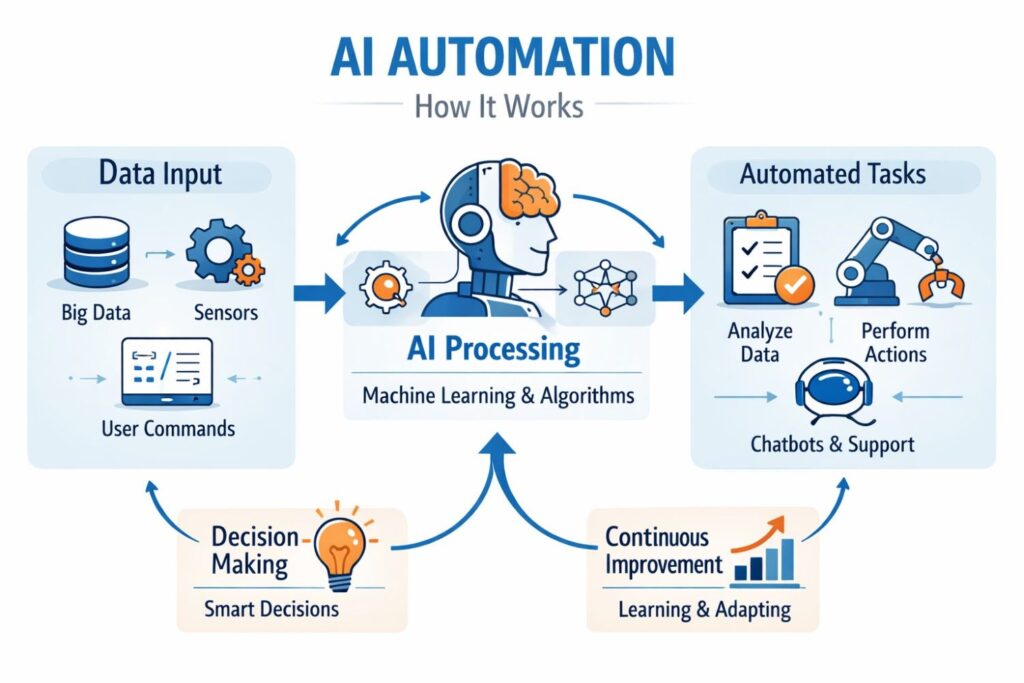
AI automation refers to the use of artificial intelligence technologies to perform tasks with minimal or no human intervention. Unlike traditional automation, AI-powered systems can:
- Learn from data
- Adapt to changes
- Make intelligent decisions
- Improve performance over time
Examples include machine learning algorithms, robotic process automation (RPA), natural language processing (NLP), and computer vision.
According to Google AI research, artificial intelligence is becoming a core driver of automation across industries.
For those who are new to this field, understanding the basics is essential. This beginner-friendly guide on AI automation for beginners explains the core concepts in simple language.
Why AI Automation Is the Future
The future of AI automation is driven by several powerful factors:
1. Explosion of Data
Every second, massive amounts of data are generated. AI automation can analyze this data faster and more accurately than humans.
2. Need for Efficiency
Companies want to reduce costs, minimize errors, and increase productivity—AI automation delivers all three.
3. Advancements in Technology
Cloud computing, big data, and powerful GPUs have made AI systems faster, cheaper, and more accessible.
4. Demand for Personalization
Users expect personalized experiences, and AI automation makes this possible at scale.
Key Areas Where AI Automation Will Dominate

1. Business and Enterprise Automation
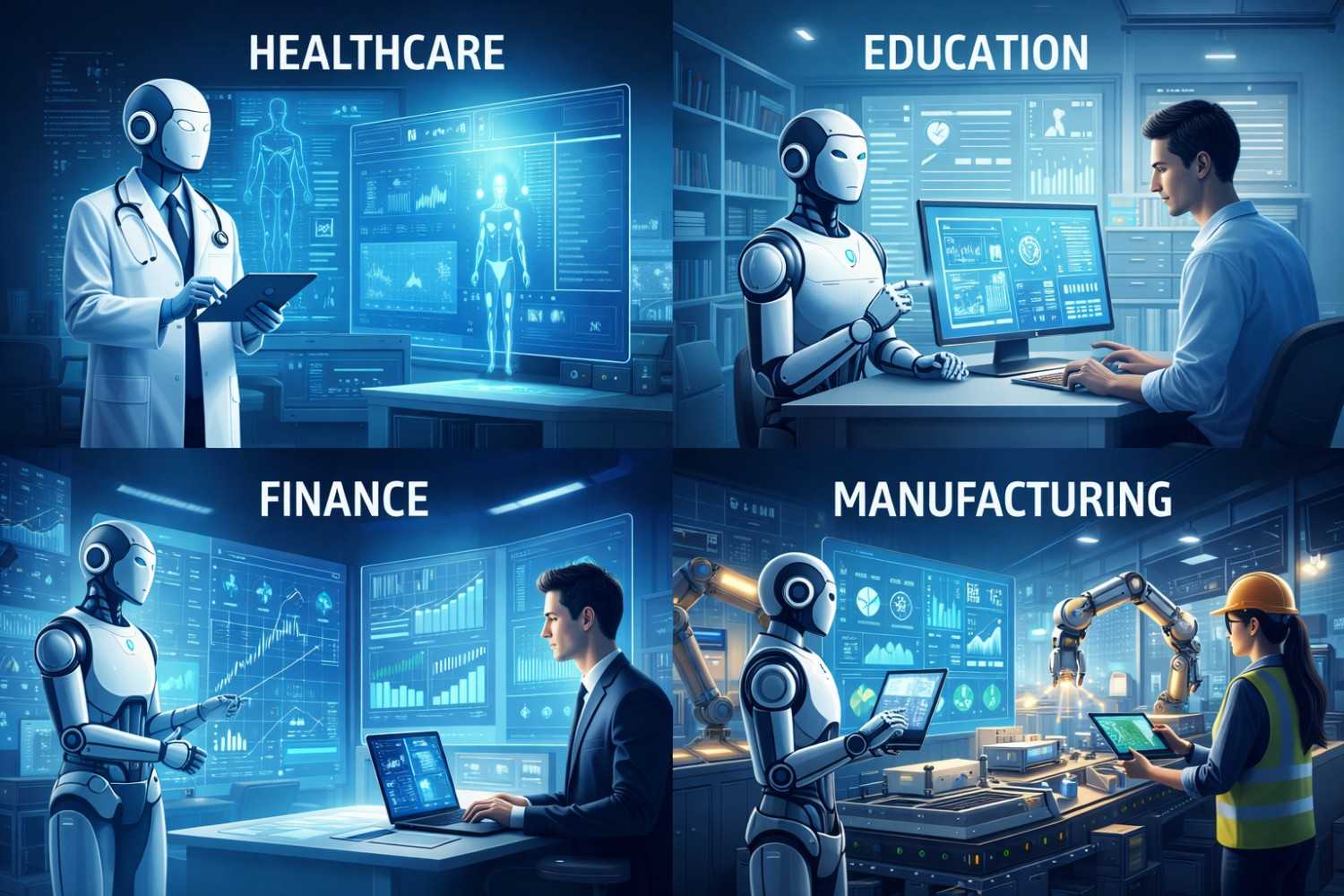
In the future, AI automation will become the backbone of business operations.Studies on AI automation in business show that companies using AI gain higher productivity and faster decision-making.
Examples:
- Automated customer support using AI chatbots
- Smart CRM systems predicting customer behavior
- AI-driven supply chain optimization
Impact:
- Faster decision-making
- Reduced operational costs
- Improved customer satisfaction
- Many organizations are already using AI to streamline operations. Discover how AI automation for business productivity helps companies increase efficiency and reduce operational costs.
2. Healthcare Automation
AI automation is transforming healthcare by improving accuracy and saving lives.
Future applications include:
- AI-assisted medical diagnosis
- Automated patient monitoring
- Robotic surgery
- Predictive disease detection
Doctors will use AI as a support system, not a replacement, leading to better healthcare outcomes.The World Health Organization highlights the role of AI in healthcare for early diagnosis and improved patient care.
3. Education and Learning
The future of education will be highly personalized through AI automation.
How AI will change education:
- Personalized learning paths
- Automated grading systems
- AI tutors available 24/7
- Skill-based learning recommendations
This will make education more accessible and inclusive worldwide.
4. Marketing and Content Creation
AI automation is reshaping digital marketing and content strategies.
Examples:
- AI-generated content and copywriting
- Automated SEO optimization
- Customer behavior prediction
- Smart ad targeting
Marketers will rely on AI tools to make data-driven decisions faster than ever.These advancements are powered by modern platforms and software. A detailed list of the most effective AI automation tools can help businesses and individuals get started quickly.
5. Manufacturing and Robotics
Smart factories powered by AI automation are the future of manufacturing.
Benefits include:
- Predictive maintenance
- Reduced downtime
- Automated quality control
- Higher production efficiency
This leads to safer workplaces and better product quality.
6. Finance and Banking
AI automation will redefine financial services.
Future trends:
- Fraud detection using machine learning
- Automated trading systems
- AI-powered financial advisors
- Faster loan approvals
Banks will become more secure, efficient, and customer-centric.
Benefits of AI Automation
AI automation offers significant advantages for individuals and organizations:
- Increased productivity
- Lower operational costs
- Higher accuracy and fewer errors
- 24/7 availability
- Scalability
- Better decision-making
These benefits explain why AI automation adoption is accelerating globally.
Challenges and Risks of AI Automation
Despite its benefits, AI automation also presents challenges:
1. Job Displacement
Some routine jobs may be replaced, but new roles will emerge requiring AI-related skills.
2. Data Privacy and Security
AI systems rely heavily on data, raising concerns about privacy and misuse.
3. Ethical Concerns
Bias in AI algorithms and lack of transparency are serious issues that must be addressed.
4. Dependence on Technology
Over-reliance on automation can reduce human oversight if not managed properly.
Human + AI: The Future Collaboration
The future is not about AI replacing humans, but AI empowering humans.
- Humans provide creativity, empathy, and critical thinking
- AI provides speed, accuracy, and data intelligence
Together, they create a powerful collaboration that drives innovation.
Future Trends in AI Automation (2026 and Beyond)
Here are key trends shaping the future:
- Autonomous AI systems
- Hyper-personalization
- AI-powered decision intelligence
- Voice and conversational AI
- AI in cybersecurity
- Low-code and no-code AI tools
These trends indicate that AI automation will become more user-friendly and widespread.According to the World Economic Forum, the future of AI automation will focus on ethical, scalable, and human-centered systems.
How to Prepare for the AI Automation Future

To stay relevant in the AI-driven future:
- Learn AI and automation basics
- Develop data literacy skills
- Focus on creativity and problem-solving
- Embrace lifelong learning
- Use AI tools instead of fearing them
Adaptability will be the most valuable skill.Many businesses choose to work with an experienced AI automation agency to design, implement, and scale intelligent automation systems.
Conclusion
The future of AI automation is powerful, promising, and transformative. It will reshape industries, redefine jobs, and enhance human potential. While challenges exist, the benefits far outweigh the risks when AI is used responsibly.
AI automation is not just a technological shift—it is a global evolution. Those who understand and adopt it early will lead the future, while others risk being left behind.
The future is intelligent.
The future is automated.
And the future starts now.
Frequently Asked Questions (FAQs)
1. What is AI automation in simple words?
AI automation means using artificial intelligence to perform tasks automatically without constant human involvement. It allows machines to learn, make decisions, and improve over time, unlike traditional automation that follows fixed rules.
2. Why is AI automation important for the future?
AI automation is important because it increases efficiency, reduces costs, improves accuracy, and helps businesses and individuals handle complex tasks faster. As data and digital systems grow, AI automation becomes essential for managing them effectively.
3. Will AI automation replace human jobs?
AI automation may replace some repetitive and routine jobs, but it will also create new job opportunities. The future will focus on human–AI collaboration, where humans handle creative and strategic tasks while AI manages data-driven and repetitive work.
4. Which industries will benefit the most from AI automation?
Industries that will benefit the most include:
- Healthcare
- Business and enterprise operations
- Education
- Finance and banking
- Manufacturing
- Digital marketing and e-commerce
Almost every industry will be influenced by AI automation in some way.
5. How is AI automation different from traditional automation?
Traditional automation follows fixed rules and cannot adapt. AI automation, on the other hand, can learn from data, adapt to changes, make predictions, and improve performance without manual reprogramming.
6. Is AI automation safe to use?
AI automation is generally safe when used responsibly. However, issues like data privacy, security, and ethical concerns must be handled carefully. Proper regulations and human oversight are necessary to ensure safe AI usage.
7. What are the main benefits of AI automation?
The main benefits include:
- Increased productivity
- Reduced human error
- Faster decision-making
- Cost savings
- 24/7 availability
- Better customer experience
8. What skills are needed for the future of AI automation?
Important skills include:
- Basic AI and automation knowledge
- Data analysis and digital literacy
- Critical thinking
- Creativity and problem-solving
- Adaptability and continuous learning
Technical and soft skills together will be highly valuable.
9. Can small businesses use AI automation?
Yes, AI automation is no longer limited to big companies. Many affordable AI tools are available for small businesses, such as chatbots, automated marketing tools, and AI-powered analytics platforms.
10.Will AI automation continue to grow in the future?
Yes, AI automation will continue to grow rapidly due to technological advancements, increasing data availability, and global demand for efficiency and innovation.
Pingback: Future Technology That Will Change the World in 2030 (Complete Guide)
Absolutely! AI automation is definitely transforming our future in exciting ways. Thanks for sharing your thoughts—there’s so much more to explore in this field.