
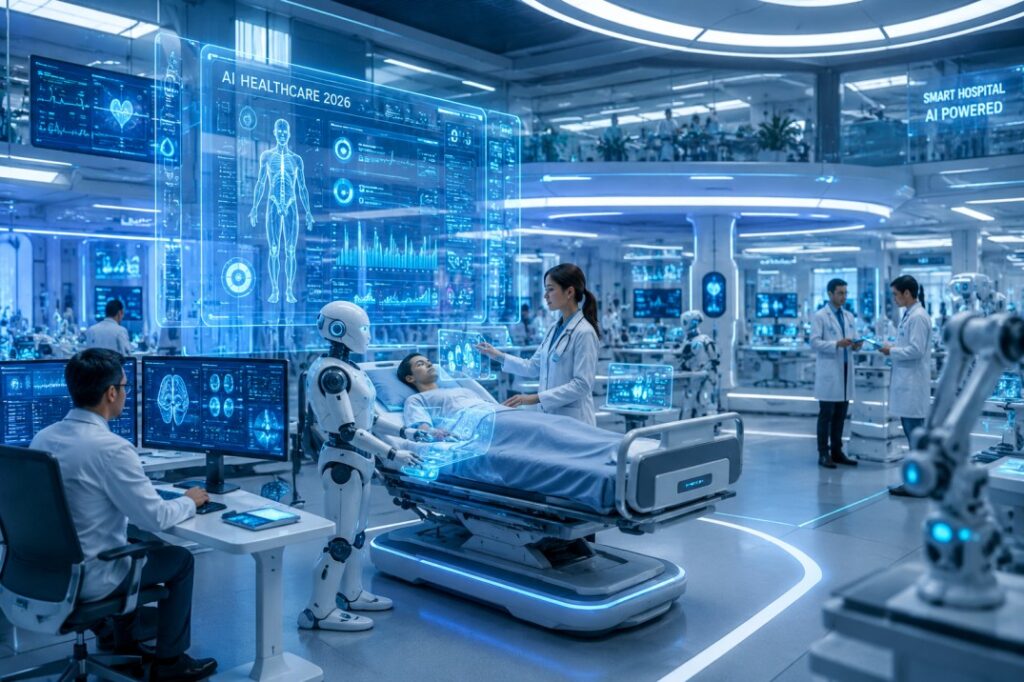
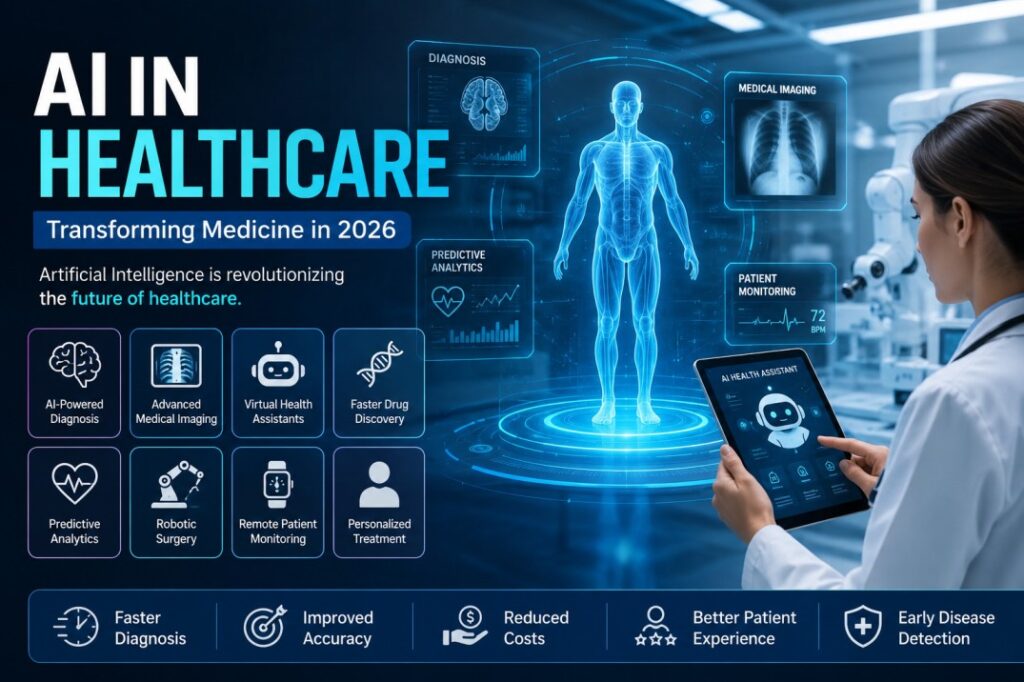
AI in healthcare 2026 is rapidly transforming the global medical industry in 2026. Artificial intelligence has become a core technology in modern hospitals, improving diagnosis accuracy, patient care, medical imaging, and treatment planning.
In today’s healthcare systems, AI in healthcare is used for predictive analytics, robotic surgery, drug discovery, and virtual health assistants. This transformation is helping doctors reduce workload, detect diseases earlier, and deliver personalized treatment.
The demand for AI in healthcare is increasing due to rising patient numbers, shortage of medical staff, and the need for faster and more accurate diagnosis.
What Is AI in Healthcare?
AI in healthcare refers to the use of machine learning, deep learning, natural language processing (NLP), robotics, and predictive analytics to improve medical services and patient outcomes.
AI systems can analyze huge amounts of medical data much faster than humans. These systems learn from patterns, identify diseases, assist doctors, predict risks, and automate complex healthcare processes.
In simple words:
AI helps healthcare professionals make smarter, faster, and more accurate decisions.
Why AI in Healthcare Is Growing Rapidly in 2026
The adoption of AI in healthcare has increased dramatically because of several important factors:
1. Explosion of Medical Data
Hospitals generate massive amounts of data every day, including:
- Electronic Health Records (EHRs)
- Lab reports
- X-rays and MRIs
- Patient histories
- Wearable device data
- Genomic data
AI can process this data efficiently and identify patterns that humans may miss.
2. Shortage of Healthcare Professionals
Many countries face shortages of doctors, nurses, and specialists. AI tools help reduce workload by automating routine tasks and supporting medical staff.
3. Demand for Faster Diagnosis
Patients expect quicker and more accurate healthcare services. AI-powered systems can diagnose diseases in seconds or minutes.
4. Personalized Medicine
AI helps doctors create personalized treatment plans based on a patient’s genetics, lifestyle, and medical history.
Major Applications of AI in Healthcare in 2026
1. AI-Powered Disease Diagnosis
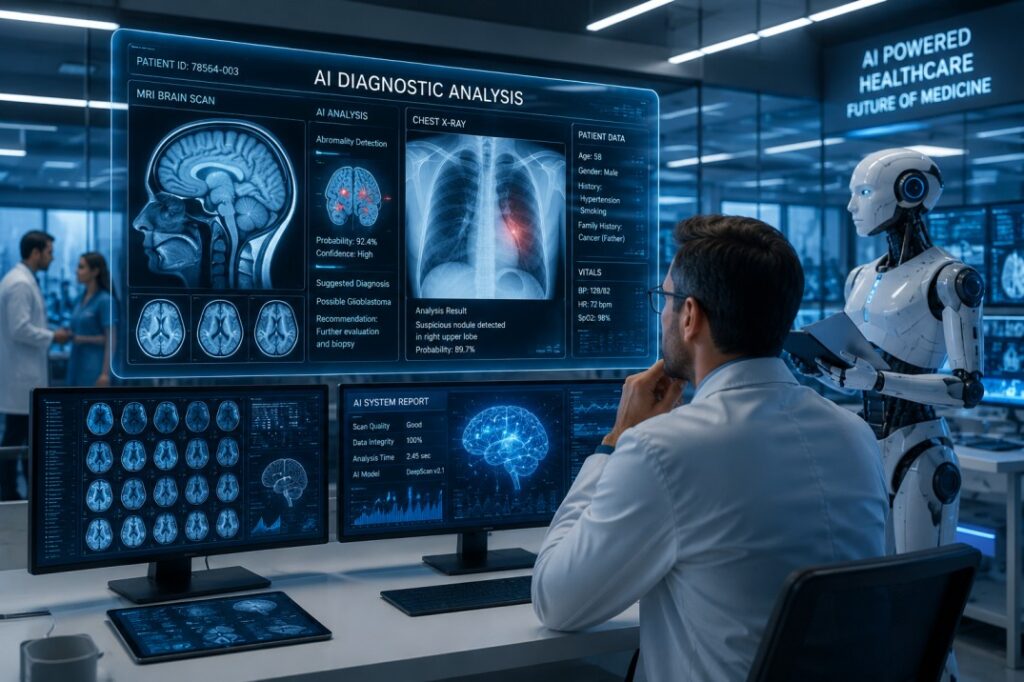
One of the biggest applications of AI is disease detection and diagnosis.
AI algorithms can analyze medical images such as:
- X-rays
- CT scans
- MRI scans
- Ultrasounds
These systems can detect diseases including:
- Cancer
- Heart disease
- Stroke
- Pneumonia
- Brain tumors
- Diabetic retinopathy
In many cases, AI can identify abnormalities earlier than human doctors.
Example
AI systems used in radiology can highlight suspicious areas in scans, helping radiologists make faster and more accurate diagnoses.
2. AI in Medical Imaging
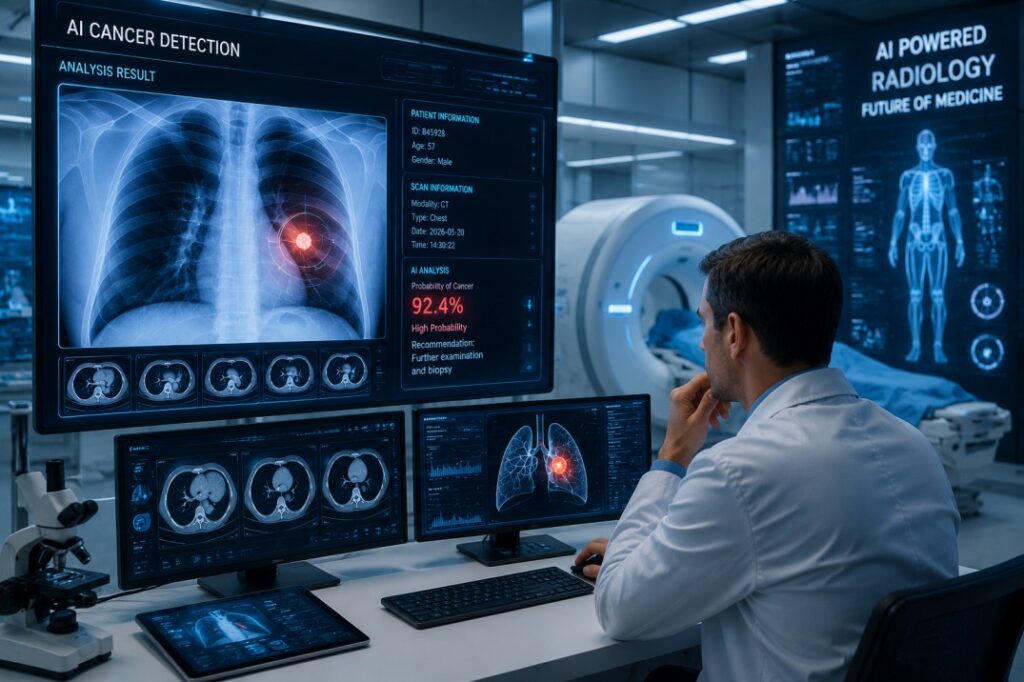
Medical imaging has become one of the most advanced AI-driven areas.
AI tools improve:
- Image quality
- Detection speed
- Accuracy of reports
- Workflow automation
Benefits of AI Imaging
- Reduces human error
- Saves time
- Detects hidden patterns
- Assists radiologists
- Improves patient outcomes
Hospitals in 2026 increasingly use AI-assisted imaging platforms for early cancer detection.
3. Virtual Health Assistants and AI Chatbots
AI-powered virtual assistants are improving patient communication and healthcare accessibility.
These systems can:
- Schedule appointments
- Answer medical questions
- Provide medication reminders
- Monitor symptoms
- Offer mental health support
AI chatbots are available 24/7 and reduce pressure on hospital staff.AI-powered mental health assistants are also helping patients manage anxiety, depression, and emotional disorders more effectively.
Example
Patients can describe symptoms to an AI assistant, which suggests possible conditions and recommends whether medical attention is needed.
4. AI in Drug Discovery
Traditional drug development takes years and costs billions of dollars.
AI is revolutionizing pharmaceutical research by:
- Predicting drug effectiveness
- Identifying chemical compounds
- Accelerating clinical trials
- Reducing research costs
In 2026, pharmaceutical companies use AI to develop treatments for cancer, rare diseases, and viral infections much faster than before.
5. Personalized Treatment Plans
Every patient is different. AI helps doctors create customized treatment strategies.
AI analyzes:
- Genetics
- Lifestyle habits
- Medical history
- Previous treatments
- Environmental factors
This approach improves treatment effectiveness and reduces side effects.AI can also recommend personalized diet and nutrition plans based on a patient’s health condition and lifestyle.
Example
Cancer treatments can now be personalized based on a patient’s genetic profile.
6. Predictive Analytics in Healthcare
Predictive AI models help hospitals forecast medical risks before they become serious.
AI can predict:
- Heart attacks
- Sepsis
- Diabetes complications
- Readmission risks
- Disease outbreaks
Early prediction allows doctors to take preventive action.AI tools are improving the diagnosis of digestive disorders and gastrointestinal diseases through smart predictive analysis.
7. AI in Robotic Surgery
Robotic-assisted surgeries have become more advanced in 2026.
AI-powered surgical robots help surgeons perform:
- Minimally invasive procedures
- High-precision operations
- Complex surgeries
Benefits
- Smaller incisions
- Less pain
- Faster recovery
- Reduced blood loss
- Higher precision
AI does not replace surgeons but enhances surgical accuracy.
8. Remote Patient Monitoring
Wearable devices and AI-powered monitoring systems track patient health in real time.
These devices monitor:
- Heart rate
- Blood pressure
- Oxygen levels
- Glucose levels
- Sleep patterns
AI analyzes the data and alerts doctors if abnormalities are detected.
This is especially useful for elderly patients and chronic disease management.
Benefits of AI in Healthcare
Faster Diagnosis
AI systems process medical data rapidly, reducing diagnosis time.
Improved Accuracy
AI reduces human errors and improves diagnostic precision.
Reduced Healthcare Costs
Automation lowers operational expenses and increases efficiency.
Better Patient Experience
Patients receive faster responses, personalized care, and continuous monitoring.
Early Disease Detection
AI identifies diseases at earlier stages, improving survival rates.
Increased Efficiency
Doctors spend less time on administrative tasks and more time treating patients.
Challenges of AI in Healthcare
Although AI offers major advantages, there are still several challenges.
1. Data Privacy and Security
Healthcare data is extremely sensitive. AI systems must protect patient information from cyber threats.
2. Ethical Concerns
Questions arise regarding:
- Patient consent
- AI decision-making
- Accountability
- Bias in algorithms
Healthcare organizations must ensure ethical AI practices.
3. High Implementation Costs
Advanced AI systems require expensive infrastructure and skilled professionals.
Small hospitals may struggle with adoption costs.
4. Dependence on Quality Data
AI systems are only as good as the data they learn from.
Poor-quality or biased data can lead to inaccurate predictions.
5. Regulatory Challenges
Governments and healthcare authorities continue developing regulations for AI-powered medical systems.
Future Trends of AI in Healthcare Beyond 2026
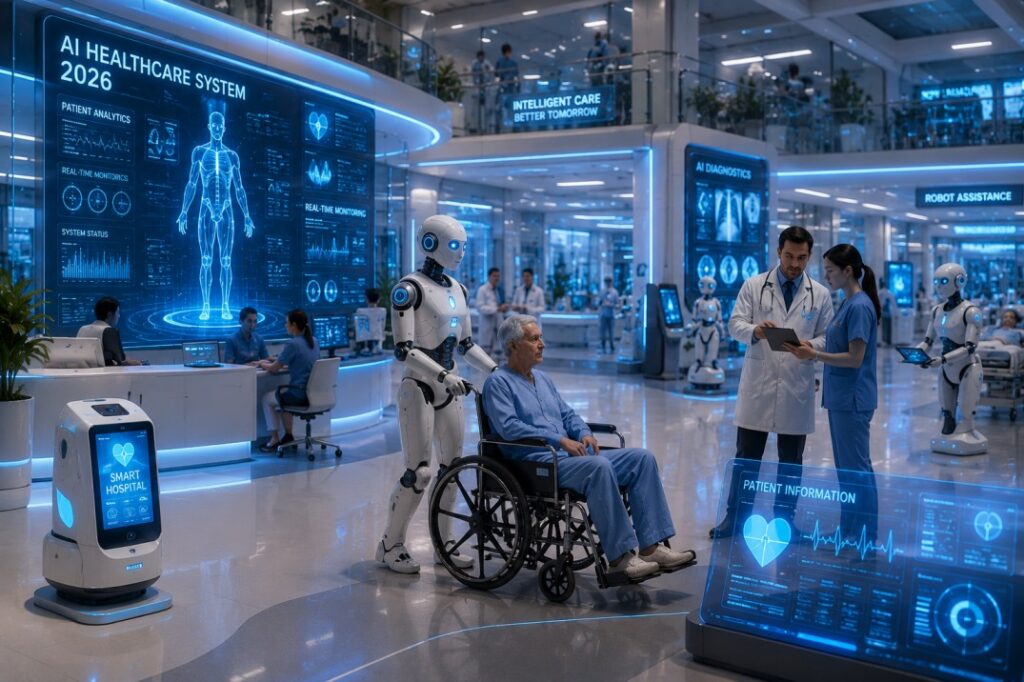
The future of AI in healthcare looks extremely promising.
AI-Powered Digital Hospitals
Smart hospitals will automate many healthcare operations using AI systems.
Advanced Predictive Healthcare
AI will predict diseases years before symptoms appear.
AI and Genomics
Genetic analysis powered by AI will improve personalized medicine.
Mental Health AI
AI-driven mental health tools will provide emotional support and therapy assistance.
AI-Powered Wearables
Future wearable devices will continuously monitor health conditions and predict emergencies.
Will AI Replace Doctors?
This is one of the most common questions in healthcare technology.
The answer is:
AI will not replace doctors, but doctors using AI may replace doctors who do not use AI.
AI works best as a support tool for healthcare professionals. Human doctors still provide:
- Emotional understanding
- Critical thinking
- Ethical judgment
- Complex decision-making
- Patient trust
The future of healthcare is collaboration between humans and AI.
AI in Healthcare Market Growth in 2026
The global AI healthcare market is growing rapidly due to increasing investments and technological advancements.
Key drivers include:
- Rising healthcare demand
- Growth of telemedicine
- Increasing medical data
- Cloud computing
- Advanced machine learning models
Major technology companies and healthcare organizations are heavily investing in AI-driven healthcare innovation.
How AI Is Improving Patient Outcomes
AI improves patient outcomes by:
- Detecting diseases earlier
- Reducing treatment delays
- Providing personalized medicine
- Monitoring patients continuously
- Improving surgical precision
These advancements save lives and improve overall healthcare quality.
Conclusion
Artificial Intelligence is transforming healthcare faster than ever in 2026. From disease diagnosis and robotic surgery to predictive analytics and personalized medicine, AI is revolutionizing how healthcare services are delivered worldwide.
While challenges such as data privacy, ethics, and implementation costs still exist, the benefits of AI in healthcare are too significant to ignore.
The future of medicine will not depend only on human expertise or machines alone. Instead, it will rely on the powerful partnership between healthcare professionals and intelligent AI systems.
As technology continues to evolve, AI-driven healthcare will become more accurate, accessible, affordable, and patient-centered — ultimately improving millions of lives around the world.
Frequently Asked Questions (FAQs)
What is AI in healthcare?
AI in healthcare refers to the use of artificial intelligence technologies like machine learning and deep learning to improve medical diagnosis, treatment, patient care, and hospital management.
How is AI used in hospitals?
AI is used for disease diagnosis, medical imaging, robotic surgery, virtual assistants, patient monitoring, and predictive analytics.
Can AI diagnose diseases?
Yes. AI systems can analyze medical data and images to detect diseases such as cancer, pneumonia, and heart conditions with high accuracy.
Is AI replacing doctors?
No. AI assists doctors but does not replace human expertise, empathy, and decision-making.
What are the benefits of AI in healthcare?
Major benefits include faster diagnosis, better accuracy, reduced costs, personalized treatment, and improved patient outcomes.
What are the risks of AI in healthcare?
Risks include data privacy concerns, algorithm bias, ethical issues, and dependency on high-quality data.