
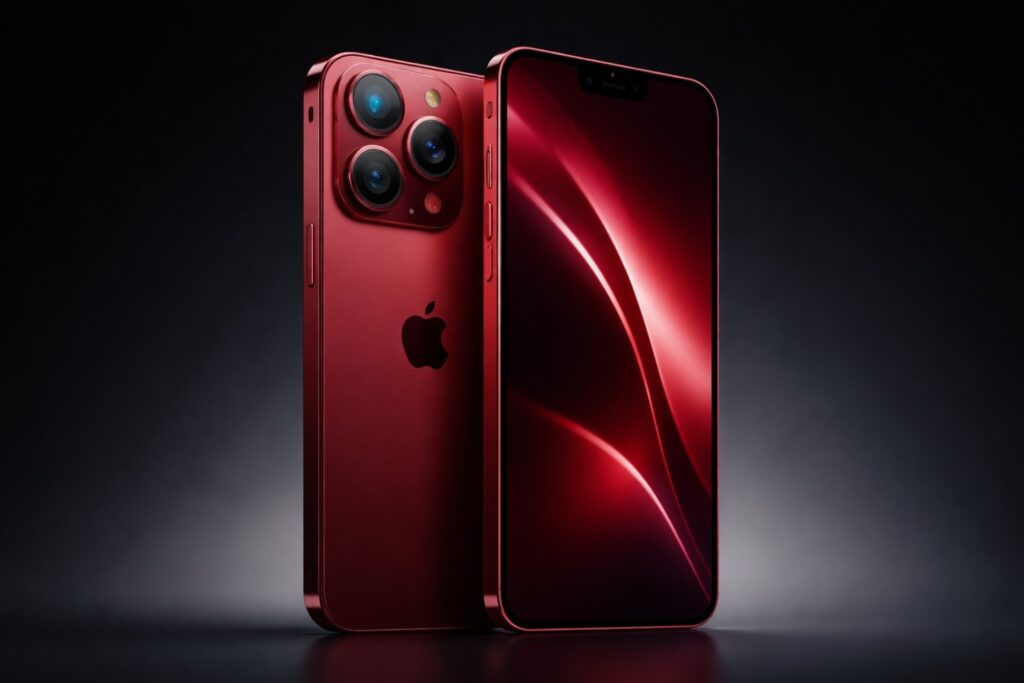
iPhone 18 Pro Features are making headlines as Apple prepares to launch its most advanced smartphone yet.
From a futuristic design to a powerful 2nm chip and satellite connectivity, these iPhone 18 Pro features are set to change the mobile experience forever.
Variable aperture camera, Apple’s first 2nm chip, a smaller Dynamic Island, satellite 5G, and a deep red finish. We’ve gone through every credible leak and analyst report so you don’t have to — here’s what it all means for real users.
Updated May 2026: This guide includes the latest iPhone 18 Pro leaks, camera upgrades, battery rumors, and Apple Intelligence features based on trusted analyst reports.
In This Guide
- The Short Version (TL;DR)
- Release Date & Launch Strategy
- Design & Colors
- Camera: The Big Story
- A20 Pro Chip & Performance
- Display & Dynamic Island
- 5G, Satellite & Connectivity
- Battery Life
- Full Specs Comparison
- Price & Storage Options
- Should You Upgrade?
- FAQ
Let’s be honest — most iPhone years feel like a footnote. A slightly faster chip, a marginally better camera, a new color nobody asked for. The iPhone 17 Pro was fine. Not bad, not groundbreaking — fine.
Why Trust This Guide?
- Based on reports from Bloomberg, MacRumors, and trusted Apple analysts
- Updated regularly with latest leaks and rumors
- Written for real users planning to upgrade in 2026
The iPhone 18 Pro looks different. Not because Apple has redesigned everything from scratch, but because a handful of the changes coming in September 2026 are genuinely the kind that change how you use the device day-to-day.
The variable aperture camera alone would make this a noteworthy year. Pair that with Apple’s first 2nm chip, a modem Apple fully controls for the first time in the Pro line, satellite internet capability, and a smaller Dynamic Island — and you’ve got a case for the most capable iPhone Apple has ever shipped.
The Short Version — What’s Actually New
Expected iPhone 18 Pro Price in Pakistan
| Model | Expected Price |
|---|---|
| iPhone 18 Pro 256GB | PKR 420,000+ |
| iPhone 18 Pro Max 256GB | PKR 480,000+ |
| PTA Tax | Expected Extra |
If you read nothing else, read this. The iPhone 18 Pro is expected to arrive in September 2026 with six meaningful changes:
📸
Variable Aperture Camera
A mechanical aperture on the 48MP main lens — DSLR-level light control in your pocket. A genuine first for iPhones.
⚡
A20 Pro — First 2nm Chip
Built on TSMC’s 2nm node. Roughly 15% faster, 30% more power-efficient than the A19 Pro. AI tasks run faster on-device.
📡
C2 Modem + Satellite 5G
Apple’s in-house C2 modem replaces Qualcomm. Adds mmWave 5G and full satellite internet — even in dead zones.
🔵
Smaller Dynamic Island
iPhone 18 Pro Features — What You Need to Know
Face ID’s flood illuminator moves under the display. The pill shrinks by up to 35%, giving you more usable screen.
🔋
Larger Battery + LTPO+
Pro Max gets a 5,100–5,200 mAh cell. LTPO+ display eats less power. Combined with the 2nm chip — best iPhone battery life yet.
🔴
Deep Red Color Option
Mark Gurman confirmed Apple tested a “deep red” titanium finish. Not the bright red of standard iPhones — richer, more refined.
If you’re interested in how devices like the iPhone 18 Pro fit into the bigger picture of innovation, check out our guide on future technology trends.
Release Date & Apple’s New Launch Strategy
Apple is doing something it has never done before with the iPhone 18 lineup. Instead of releasing four iPhones together in September, the company is splitting the launch across two windows. The iPhone 18 Pro, iPhone 18 Pro Max, and the new foldable iPhone will arrive in fall 2026 — most likely September, following the usual announcement-to-sale timeline Apple has used for years.
The standard iPhone 18 and the budget iPhone 18e, however, won’t come until spring 2027. This is a deliberate move by Apple to spotlight its premium devices during the holiday shopping season. For consumers, it creates a somewhat frustrating situation: if you want a new iPhone this fall but don’t want to pay $999 or more, you’ll be waiting until next year.
“Apple’s fall 2026 iPhone launch will consist entirely of phones costing $999 or more. If you want a budget upgrade, you’re looking at spring 2027.”Based on reporting from MacRumors, Macworld, and analyst Ming-Chi Kuo
The timeline everyone expects: Apple announces in early September, pre-orders open within days, and the Pro models ship by the third week of September. Production testing for the 18 Pro reportedly began on schedule, so there’s no indication of any delay as of April 2026.
Design & Color Options — What Changes, What Stays
The iPhone 18 Pro is not a redesign year. Apple is keeping the titanium frame, the plateau-style rear camera module, and the same 6.3-inch and 6.9-inch display sizes introduced with the iPhone 17 Pro. If you set the two phones side by side, you’d struggle to tell them apart at a glance. That isn’t necessarily a problem — the iPhone 17 Pro’s chassis was already excellent. But don’t expect jaws to drop based on looks alone.
What’s Subtly Different
Two design details are worth noting. First, the rear Ceramic Shield area (where MagSafe charging lives) may get a slightly more frosted or semi-transparent appearance — leakers have described it inconsistently, so treat this as speculative. Second, the Camera Control button introduced on the 17 Pro will reportedly be simplified, removing the swipe-gesture functionality. Reactions to that feature were mixed, so the change makes sense.
Colors: Deep Red Is Coming — Black Is Not
The iPhone 17 Pro dropped black for the first time, replacing it with Cosmic Orange, Deep Blue, and Silver. A lot of people were unhappy. The iPhone 18 Pro is not bringing it back. According to Weibo leaker Instant Digital — whose track record on Apple colors has been solid — black won’t appear on the Pro line for the second consecutive year.
What you will get is a shade of red. Bloomberg’s Mark Gurman — arguably the most reliable Apple journalist alive — confirmed Apple has been testing a “deep red” finish for the Pro and Pro Max. This isn’t the bold, saturated red of standard iPhones. Think: burgundy, wine, a muted crimson on a titanium frame. Other leakers mention coffee brown and even purple as additional options. These might be separate colors, or they might be different people describing the same reddish tone. We’ll likely know more after WWDC in June.
Camera: The Biggest Story of the iPhone 18 Pro
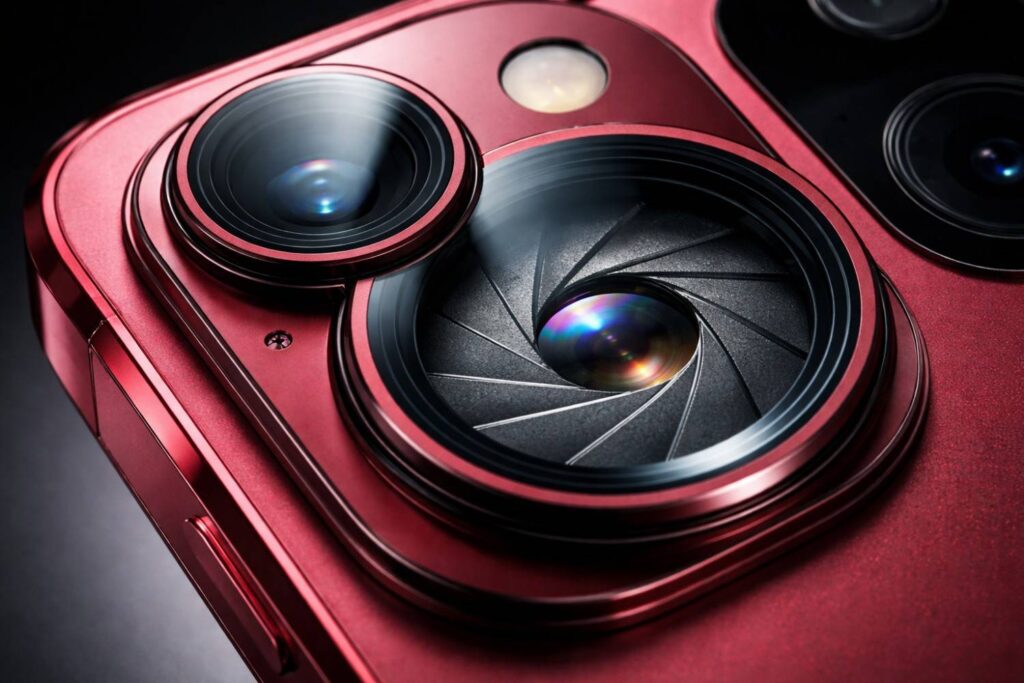
This is where things get genuinely exciting. On the surface, the triple 48MP rear camera system looks unchanged from the 17 Pro. But the main lens is getting hardware that iPhones have never had before — and it fundamentally changes what you can do with the camera.
Modern smartphone photography is increasingly powered by AI — if you’re new to this, our beginner-friendly guide on AI automation explains how it all works.
iPhone 18 Pro vs DSLR Camera
“The variable aperture system could make the iPhone 18 Pro one of the closest smartphone cameras to DSLR-style photography.
Variable Aperture: What It Is and Why It Matters
Every iPhone made so far has a fixed aperture — the opening in the lens is a set size, permanently. The iPhone 18 Pro is rumored to feature a variable aperture on the 48MP Fusion camera, meaning the lens can mechanically open wider or close down, just like a DSLR or mirrorless camera.
Why does this matter in practice? Three reasons:
1. Better low-light photography. When it’s dark, the aperture opens wide, letting in more light. Your night shots will look cleaner with less noise — naturally, not just through software processing.
2. Overexposure control in bright conditions. Shoot in direct sunlight and the aperture closes down, preventing blown-out highlights. No more washed-out skies above a landscape.
3. Real depth of field control. This is the big one for photography enthusiasts. A wider aperture creates genuine background blur — a shallow depth of field. A narrow aperture keeps everything sharp. iPhones can fake this now with Portrait Mode, but a mechanical aperture does it optically. The difference is noticeable, especially at the edges of subjects.
Important note: Some reports indicate variable aperture may be exclusive to the Pro Max, while others say both Pro models get it. Macworld’s latest roundup left this question open. Treat it as confirmed for the 18 Pro lineup, but which specific model (or both) is still unresolved.
Three-Layer Stacked Sensor
Leaks also point to a new three-layer stacked camera sensor — reportedly from Samsung — built specifically for the iPhone 18 Pro. A stacked sensor design improves readout speed, reduces rolling shutter, and enhances dynamic range. Combined with the variable aperture, the main camera is getting a comprehensive overhaul, not just an incremental spec bump.
Selfie Camera Upgrade
The front camera is expected to jump from 12MP to 24MP. This is meaningful for video calls, FaceTime, and self-portraits — a resolution increase that translates directly to sharper images with more detail to crop into
Best Uses of Variable Aperture
Natural depth effects.
Portrait photography
Night photography
Cinematic video recording
Better background blur
A20 Pro Chip — Apple’s First 2nm Processor
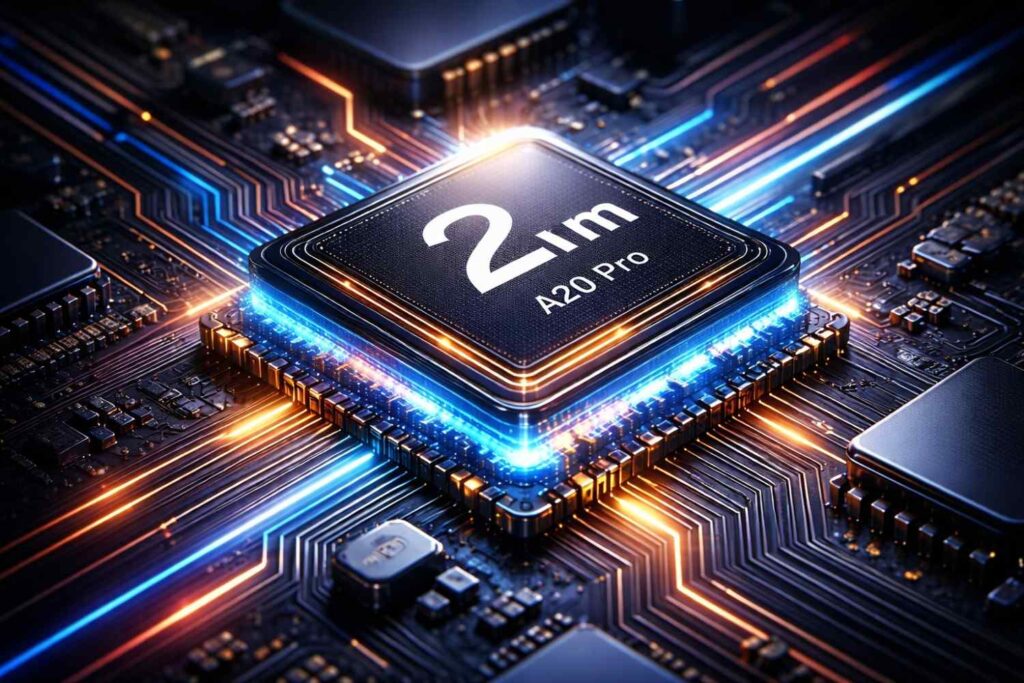
The A19 Pro chip inside the iPhone 17 Pro was built on TSMC’s 3nm process. The A20 Pro moves to 2nm — TSMC’s most advanced manufacturing node available in 2026. This is a meaningful architectural step, not just a marketing number.
Gaming Performance Expectations
- Faster FPS in AAA mobile games
- Better thermal management
- Improved battery efficiency during gaming
- Faster AI processing
What does a smaller process node actually mean? The transistors on the chip are physically smaller, which allows more of them to fit on the same amount of silicon. More transistors means more computing power. And smaller transistors generate less heat and consume less power. The A20 Pro is expected to deliver approximately 15% better performance and around 30% improved power efficiency compared to the A19 Pro.
For students who rely on performance-heavy apps, don’t miss our curated list of top tools for students.
What This Means for AI
Apple Intelligence — Apple’s on-device AI system — needs raw processing power to run locally without constantly sending requests to the cloud. The A20 Pro gives it significantly more headroom. Features like real-time translation, advanced writing tools, and Siri’s contextual awareness should all feel noticeably more responsive. Early Apple Intelligence features on the 17 Pro sometimes felt sluggish or required cloud fallback. That bottleneck shrinks considerably with the 2nm chip.
Display & Dynamic Island — The Smaller Pill
Display sizes aren’t changing. The iPhone 18 Pro stays at 6.3 inches and the Pro Max at 6.9 inches. But two meaningful improvements are coming.
LTPO+ Technology
The iPhone 18 Pro is expected to use LTPO+ display panels — an improved version of the low-temperature polycrystalline oxide technology Apple has used since the iPhone 13 Pro. LTPO+ is better at dynamically adjusting refresh rates (from as low as 1Hz up to 120Hz), which means the display consumes less power during static content like reading. Combined with the A20 Pro’s improved efficiency, this contributes to overall battery life gains.
Dramatically Higher Brightness
According to a Weibo leaker, Apple has set “unprecedentedly high brightness requirements” for the iPhone 18 display — requirements so demanding that at least one display supplier is struggling to meet them. For users, this means better outdoor visibility and more vibrant HDR content.
The Smaller Dynamic Island
The Dynamic Island arrived with the iPhone 14 Pro. The pill-shaped cutout houses the front camera and Face ID sensors, and Apple has used it creatively for notifications and live activities. On the iPhone 18 Pro, one key Face ID component — the flood illuminator — moves under the display glass, allowing Apple to physically shrink the pill by roughly 35%.
To be clear: the Dynamic Island isn’t disappearing. Early rumors suggested Apple might go to a single punch-hole camera (moving Face ID entirely under the display), but multiple reliable leakers including Instant Digital and Ross Young of DSCC have walked that back. You’ll still have a Dynamic Island — just smaller and less intrusive.
5G, Satellite Internet & The C2 Mode
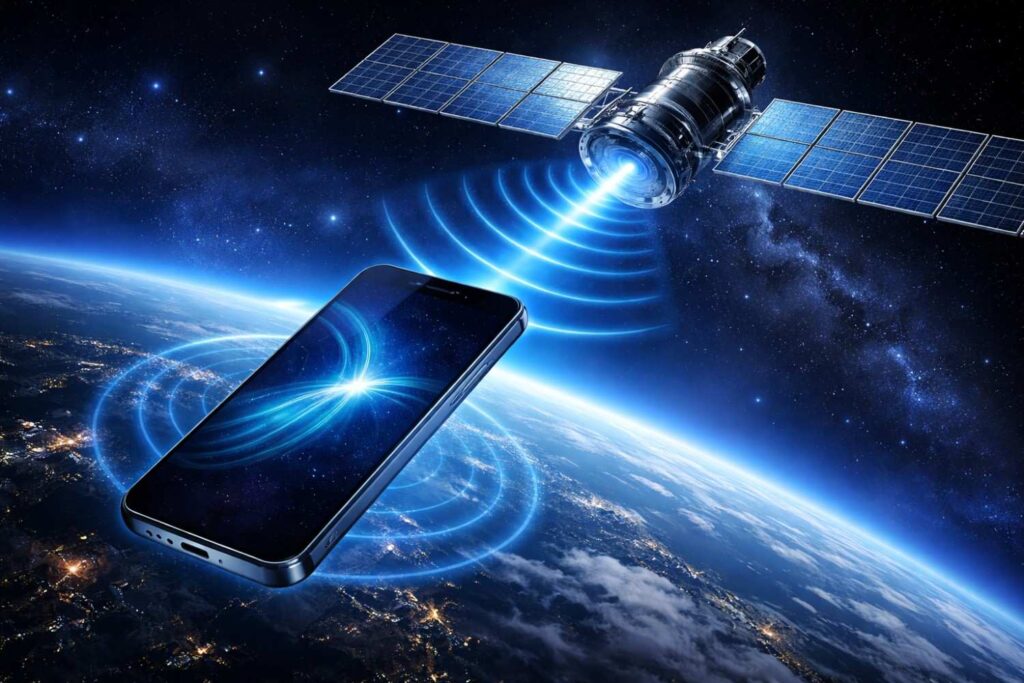
This is one of the most underrated stories of the iPhone 18 Pro. Apple has been building its own cellular modems to replace the Qualcomm chips it has relied on for years. The C1 modem debuted in the iPhone 16e. The C1X came with the iPhone Air. Now, the C2 modem arrives in the iPhone 18 Pro — and it’s the most capable yet.With increasing connectivity, security becomes critical — learn how to stay safe in our guide to protecting yourself from hackers.
mmWave 5G
The C2 modem is expected to support mmWave 5G — the ultra-fast, short-range 5G standard that Qualcomm’s chips have supported in previous Pro iPhones. This brings download speeds in supported areas that can reach multiple gigabits per second. More importantly, it means Apple’s in-house modem is now on parity with Qualcomm’s in terms of raw connectivity capability.
Satellite Internet — Anywhere
This is genuinely new territory. The C2 modem is rumored to support the NR-NTN (New Radio Non-Terrestrial Networks) standard, enabling full internet access over satellite — not just emergency SOS messaging. Apple Maps, third-party apps, and general data would work even when there’s no cell tower in range. For travelers, hikers, rural users, and anyone who’s been stuck without signal, this is a transformative addition.
N2 Wireless Chip
Alongside the C2 modem, the iPhone 18 Pro is expected to include Apple’s N2 chip — handling Wi-Fi 7, Bluetooth 6, and Thread. The N2 should bring improvements to AirDrop reliability, Personal Hotspot performance, and wireless data throughput over Wi-Fi 7 networks.
Battery Life — Quietly the Best iPhone Ever Made
Battery specs look modest on paper. The iPhone 18 Pro Max is expected to pack a 5,100–5,200 mAh battery, up from around 5,088 mAh in the 17 Pro Max. That’s barely a 2% increase in raw capacity. But battery life is never just about the mAh number.
Expected Charging Speeds
Rumors suggest Apple may improve:
- MagSafe charging
- USB-C charging speed
- Heat management during fast charging
Three things stack together here: a larger battery, a 2nm chip that uses 30% less power, and an LTPO+ display that sips energy during low-activity periods. The combination could make the iPhone 18 Pro Max one of the longest-lasting smartphones available — not just among iPhones. The Pro Max will reportedly be slightly thicker (around 8.8mm) and heavier (over 240g) to accommodate the bigger cell. For some users that’s a trade-off they’ll notice; for most, it won’t matter.
Full Specs — iPhone 18 Pro vs iPhone 17 Pro
| Feature | iPhone 17 Pro | iPhone 18 Pro (Expected) |
|---|---|---|
| Chip | A19 Pro (3nm) | A20 Pro (2nm) ↑ |
| Main Camera | 48MP, fixed aperture | 48MP, variable aperture ↑ |
| Front Camera | 12MP | 24MP ↑ |
| Display Size | 6.3″ LTPO | 6.3″ LTPO+ ↑ |
| Dynamic Island | Standard size | ~35% smaller ↑ |
| Modem | Qualcomm | Apple C2 ↑ |
| 5G | Sub-6GHz + mmWave | mmWave + Satellite ↑ |
| Battery (Pro Max) | ~5,088 mAh | ~5,100–5,200 mAh ↑ |
| RAM | 8GB | 12GB ↑ |
| Colors | Cosmic Orange, Blue, Silver | Deep Red, Coffee (rumored) ↑ |
| Starting Price | $999 / $1,099 | ~$999 / $1,099 (expected) |
Price — Will Apple Raise It?
The honest answer: probably not for the base storage tier, but uncertainty is real. Analyst Ming-Chi Kuo has said Apple plans to absorb the higher cost of the 2nm chip to hold prices steady and defend market share. The 17 Pro started at $999 and the 17 Pro Max at $1,099. Expect the same for the 18 Pro and Pro Max at 256GB.
That said, the 2nm chip costs approximately $85 per unit to manufacture — up from $50 for the 3nm version. RAM prices have also spiked globally due to AI demand. Samsung, OnePlus, and others have raised smartphone prices. Apple may absorb this internally, or it may raise prices on higher storage tiers (512GB and 1TB options). Don’t be surprised if the 1TB configuration costs $100–$200 more than the equivalent 17 Pro option.
Pros and Cons
Pros
- Better camera system
- Huge battery improvements
- Faster AI features
- Satellite internet support
Cons
- Same overall design
- Likely expensive
- No black color option
- Incremental upgrade from iPhone 17 Pro
Should You Upgrade? An Honest Framework
✅ Strong Case to Upgrade
- You’re on iPhone 14 or older
- You care about camera quality (variable aperture is a real-world improvement)
- You travel or spend time in areas with poor cell coverage
- You use Apple Intelligence features regularly
- You want the longest possible battery life from an iPhone
- You’re switching from Android and want the best iPhone available
⏳ Consider Waiting or Skipping
- You already have iPhone 17 Pro — the gains are incremental
- Design and form factor are identical to the 17 Pro
- You prefer black — it’s not available again this year
- You mostly use the phone for calls, messages, and social media
- Budget is a concern — wait for the standard iPhone 18 in spring 2027
- You’d rather see the foldable iPhone first and decide
For anyone on an iPhone 15 Pro or older, the jump to the 18 Pro represents around three years of hardware development in a single upgrade. The camera alone — going from a fixed aperture to variable mechanical control — is a generational shift for photography-focused users. Add satellite internet, the C2 modem’s efficiency, and the 2nm chip’s AI performance, and this is one of the more compelling Pro upgrade cycles in recent memory.
Frequently Asked Questions
Will iPhone 18 Pro support AI features?
Yes, the iPhone 18 Pro is expected to heavily focus on AI-powered features through Apple Intelligence. Thanks to the new A20 Pro 2nm chip and upgraded Neural Engine, users may see faster on-device AI processing, smarter Siri interactions, real-time translation, advanced photo editing, AI writing tools, and improved app automation without relying heavily on cloud servers.
When will the iPhone 18 Pro launch?
Apple is expected to announce the iPhone 18 Pro in September 2026. Pre-orders will likely start within a few days, with shipping beginning later that month.
Will iPhone 18 Pro support AI features?
Yes, the iPhone 18 Pro is expected to support advanced Apple Intelligence features powered by the new A20 Pro chip. AI tools like smarter Siri, real-time translation, and AI photo editing may run faster directly on the device.
Is iPhone 18 Pro better than Samsung Galaxy S26 Ultra?
The iPhone 18 Pro may offer better iOS optimization, AI integration, and video performance, while the Galaxy S26 Ultra could focus more on zoom and customization. The better choice depends on whether you prefer Apple or Android.
Will the iPhone 18 Pro use USB-C?
Yes, Apple is expected to continue using USB-C on the iPhone 18 Pro lineup. This allows faster charging and better compatibility with modern accessories.
Is the iPhone 18 Pro worth waiting for?
If you have an iPhone 15 Pro or older, the iPhone 18 Pro could be worth waiting for because of its expected camera, battery, and AI upgrades. iPhone 17 Pro users may see smaller improvements.
Will the iPhone 18 Pro have satellite internet?
Leaks suggest the iPhone 18 Pro may support satellite internet connectivity beyond emergency SOS features. This could allow limited internet access even in areas without mobile networks.
What is the biggest upgrade in the iPhone 18 Pro?
The biggest rumored upgrade is the variable aperture camera system. It could improve low-light photography, natural background blur, and overall image quality.
What colors will the iPhone 18 Pro come in?
The most rumored new color is a deep red titanium finish. Other possible colors include coffee brown, silver, and dark purple shades.
How much will the iPhone 18 Pro cost?
The iPhone 18 Pro is expected to start around $999, while the Pro Max may start at $1,099. Prices for higher storage variants could increase slightly.
Will the iPhone 18 Pro have better battery life?
Yes, the iPhone 18 Pro is expected to offer better battery life due to the 2nm A20 Pro chip and improved LTPO+ display efficiency. The Pro Max model may deliver the longest battery life ever on an iPhone.
Final Verdict
If leaks are accurate, the iPhone 18 Pro could become Apple’s biggest camera and AI upgrade in years. For users on older iPhones, waiting for the 18 Pro may be the smartest upgrade decision